
Sooner or later, many of us will face a confronting family question: Is it time for Mum, Dad or a grandparent to get more support?
For many families, aged care is only discussed after a fall, a hospital admission, a worsening memory problem or a moment when living independently suddenly no longer feels safe. That can make the decision feel frightening, rushed and deeply emotional.
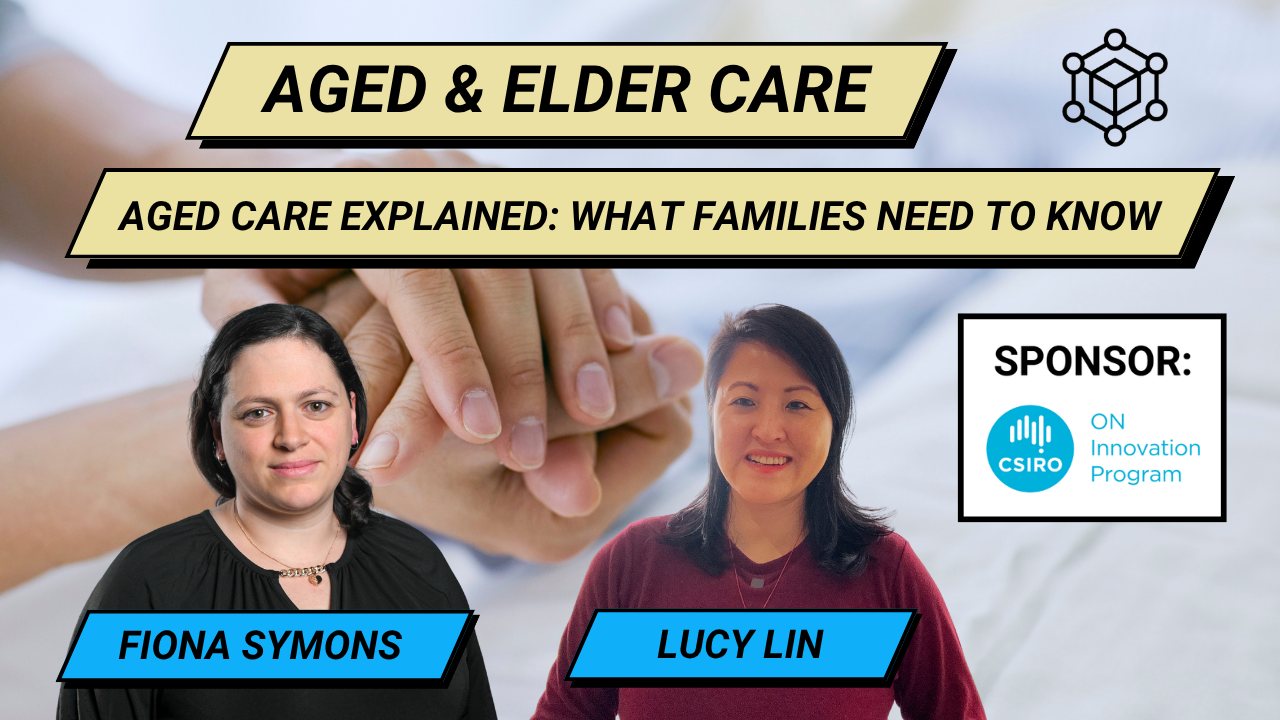
In this episode of Emerging Tech Unpacked, host Lucy Lin speaks with Fiona Symons - a registered nurse, healthcare clinician, former lawyer and co-founder of Care Window - about what aged and elder care really is, what nurses actually do, why loneliness matters, and how thoughtfully designed technology can help older people remain connected.
Fiona’s key message is reassuring: aged care is not as scary as many people imagine. But it is far easier to navigate when families start having early conversations.
Aged care is a spectrum, not just a nursing home
One of the biggest misconceptions is that aged care means a permanent move into a residential facility. In reality, it is a broad range of options designed to help people stay supported and cared for, depending on their individual circumstances.
At one end of the spectrum is support at home. Carers or support workers will visit and assist with cleaning, shopping, meals, transport, showering, wound care, medications or gardening at home. For some people, a small amount of support is enough to maintain their routine and independence. For others with higher physical needs, carers may visit more frequently to help with mobility, transfers and personal care.
Another option is assisted living or retirement-community-style housing. These models can offer an independent unit, along with access to staff, nursing support, emergency assistance, and a community of neighbours. Fiona described emerging models in which people can remain in the same building as their needs change, rather than making a single abrupt move later in life.
Residential aged care is for people who need more regular, around-the-clock care. This may be due to complex health needs, significant mobility limitations, dementia or other cognitive changes. While older stereotypes of institutional, hospital-like facilities linger, many contemporary homes are designed to feel more like communities, with private rooms, shared spaces, activities, gardens, cafés, outings and places for families to visit.
The key question is not simply, “How old is someone?”
It is: What support do they need to live safely, with dignity and with as much choice as possible?
Why early family conversations matter
Families often avoid talking about ageing because it can feel like talking about loss, illness or the end of life. But postponing the conversation can mean that choices are made only after a crisis has occurred.
Fiona explained that moves into care are often triggered by an obvious physical event: a serious fall, a broken hip, a stroke, a heart attack or a decline in mobility that makes everyday tasks unsafe. Cognitive decline can be more difficult to spot. Someone may appear fine during a short family visit while quietly struggling with meals, medication, showering, finances or safety at home.
Fiona described how people living with cognitive impairment can sometimes “mask” how much help they need by relying on familiar routines and surroundings. A move into an unfamiliar setting may then reveal the extent of the difficulty and make adjustment harder.
That does not mean residential care is automatically the answer. It means early, respectful conversations create more time to understand the person’s preferences, explore available support and plan a transition that protects familiarity and autonomy.
A helpful conversation starter is:
“What would make life easier or safer for you as you get older, and what matters most for you to keep doing?”
That question centres the older person’s voice. It shifts the discussion away from “taking independence away” and towards designing support around the life they want.
Nurses are more than the public sees
Fiona’s career has taken her from law into aged care, acute hospital care and intensive care nursing. She sees a strong connection between the two professions: both involve helping people navigate systems they may not understand during some of the hardest moments of their lives.
Nurses are frequently misunderstood. TV dramas often put doctors at the centre, but nurses are the clinicians who remain continuously at the bedside or on the floor. They assess changes, administer and check medications, monitor recovery, identify risk, coordinate care, communicate with families, explain diagnoses and help patients regain function.
As Fiona put it, a doctor may prescribe a treatment and move to the next patient. A nurse is the person who administers medication, ensures it is safe, notices when the patient is deteriorating, helps them eat or mobilise, explains what the diagnosis means, and supports the family through uncertainty.
In aged care, nursing also means advocating for residents’ comfort, dignity, choice and quality of life. It involves clinical skill, communication, judgement, emotional intelligence and a deep understanding of the person behind the care plan.
Yet nursing faces major workforce pressure. Fiona described the fatigue created by staffing shortages and the loss of experienced nurses after COVID. The work is demanding, but it is also diverse: nurses can work in hospitals, homes, community care, leadership, research, technology, education and entrepreneurship.
Loneliness is more than being alone
A major theme of the conversation is social isolation. Fiona makes an important distinction: loneliness is the feeling of being alone, and social isolation is when someone becomes disconnected from the people, activities and systems that allow them to participate in life.
Older people can experience social isolation at home when mobility changes, friends pass away, transport becomes difficult, or technology becomes too complex. It can also occur in residential care. A resident may be surrounded by staff and other residents, yet still lack meaningful connections to family, friends, culture, familiar routines, or the outside world.
Fiona explains it simply: “I can’t access the world, and the world can’t access me.”
This is why social connection should be treated as part of care, not as an optional extra after meals, medication and personal care are complete. Family visits, calls, music, outings, community links and meaningful routines all contribute to wellbeing.
Care Window: technology designed for connection
Care Window began with a personal family experience. Fiona’s father entered residential aged care after repeated stroke-like neurological episodes left him with major physical and cognitive support needs. Then COVID-19 arrived.
Like many families, Fiona’s family faced restrictions on in-person visits. Window visits and assisted phone calls were difficult to organise. Her father could no longer reliably use a television, a phone, or a video-calling app without help, even though he had been an IT professional.
Fiona and her brother Zachary, a software developer, saw a problem familiar to many aged care residents and families: mainstream technology is often not designed for people with dementia, reduced dexterity, low vision, hearing changes or limited confidence with digital tools.
They developed Care Window as a simple video phone built to remove unnecessary barriers. The device is designed around zero-to-one-touch interactions, automatic answering and a secure, pre-approved network of contacts. The aim is not to replace visiting, caring or conversation. It is to make connection more possible when a family member cannot be physically present.
Fiona shared examples of residents using Care Window to speak with family overseas, watch a concert from their room or join a family dinner remotely. These stories point to an important design principle for aged-care technology: the best tools do not ask older people to become tech experts. They adapt to people’s needs, help preserve relationships, and, through programs such as CSIRO ON Innovation, can be developed into scalable solutions with real-world impact.
The future of aged care is human-centred
Technology is often discussed as though it will replace care workers. Fiona’s perspective is more grounded. The most valuable technology reduces friction, gives nurses more time for people and enables older people to retain connection, choice and dignity.
She is interested in AI tools that reduce the administrative burden on nurses, including documentation support and clinical scribes. If used safely and responsibly, these tools could reduce time spent on typing or navigating systems and free up more time for direct care.
But the goal should remain clear: technology must support human care, not substitute for it.
That means involving residents, families, nurses and carers in the design process. It means prioritising accessibility, privacy, usability and workflow. And it means measuring success not only by efficiency, but by whether people feel more connected, more included and more in control of their lives.
One incremental care action to take today
Fiona’s practical takeaway is simple: start the conversation now.
Call an older loved one. Ask what matters to them. Ask what is becoming harder. Ask how they would like to be supported if their needs change. Discuss practical planning too, including wills, powers of attorney and advance care directives where appropriate.
You do not need to solve everything in one conversation. The point is to make ageing and care something families can discuss openly, before an emergency takes away time and choice.
Aged care is not only about care at the end of life. When done well, it is about helping people continue to live with safety, connection, dignity and purpose.
Listen to the Podcast Episode:
🎙️ Website: https://www.emergingtechunpacked.com/episodes/agedcare
🎙️ YouTube: https://youtu.be/D68Ci\_XXYMs
🎙️ Apple Podcast: https://podcasts.apple.com/us/podcast/aged-and-elder-care-explained-with-a-registered/id1734061980?i=1000783553363
🎙️ Spotify: https://open.spotify.com/episode/3yu6yBktgdUU0DsmFHYNoU?si=Pv1VtL56TqmOAMay4o25AA
🎙️ Insights Article: https://www.lucy-lin.com/insights/agedcare
Subscribe to Emerging Tech Unpacked on your favourite podcast platform or watch the episode on YouTube. Visit our website to learn more and join the conversation on social media!
🎙️ Website: https://www.EmergingTechUnpacked.com/
🎙️ YouTube: https://www.youtube.com/@emergingtechunpacked
🎙️ Apple Podcast: https://apple.co/4d6Hfoi
🎙️ Spotify: https://open.spotify.com/show/13chShsGWl7bqlQs0FZGvX?si=b7675f1bd5664c72
🔔 LinkedIn: https://www.linkedin.com/company/emergingtechunpacked
🔔 Instagram: https://www.instagram.com/emergingtechunpacked/
🔔 TikTok: https://www.tiktok.com/@emergingtechunpacked
🔔 Facebook: https://www.facebook.com/people/Emerging-Tech-Unpacked/100090565331236/
Support the Podcast!
💙 If you find this podcast valuable, consider keeping the podcast lights on and helping us cover some of our video and audio editing and operational costs: https://www.paypal.me/lucylin007007
☕ Or buy me a coffee (or three! :-): https://buymeacoffee.com/lucylin

👉 If this article was helpful, please share it and follow **Lucy Lin** and **Emerging Tech Unpacked** for more innovation and careers insights.
🚀 Contact me directly if you would like to partner or collaborate on any content, brand partnerships, sponsorship or speaking opportunities: https://www.lucy-lin.com/contact