Scroll through any app store or gaming forum, and you’ll see it: games that are fast‑paced, hyper‑stimulating, and often impossible to put down. Designed to keep players hooked, many are built around addiction loops \- reward systems that light up the brain’s dopamine pathways and keep us playing just one more round. Add overly violent themes and unrealistic female characters, and you have an industry that still struggles to balance profit with player wellbeing.
But what happens when a game developer decides to flip that script?
Breaking Free from the Addiction Loop
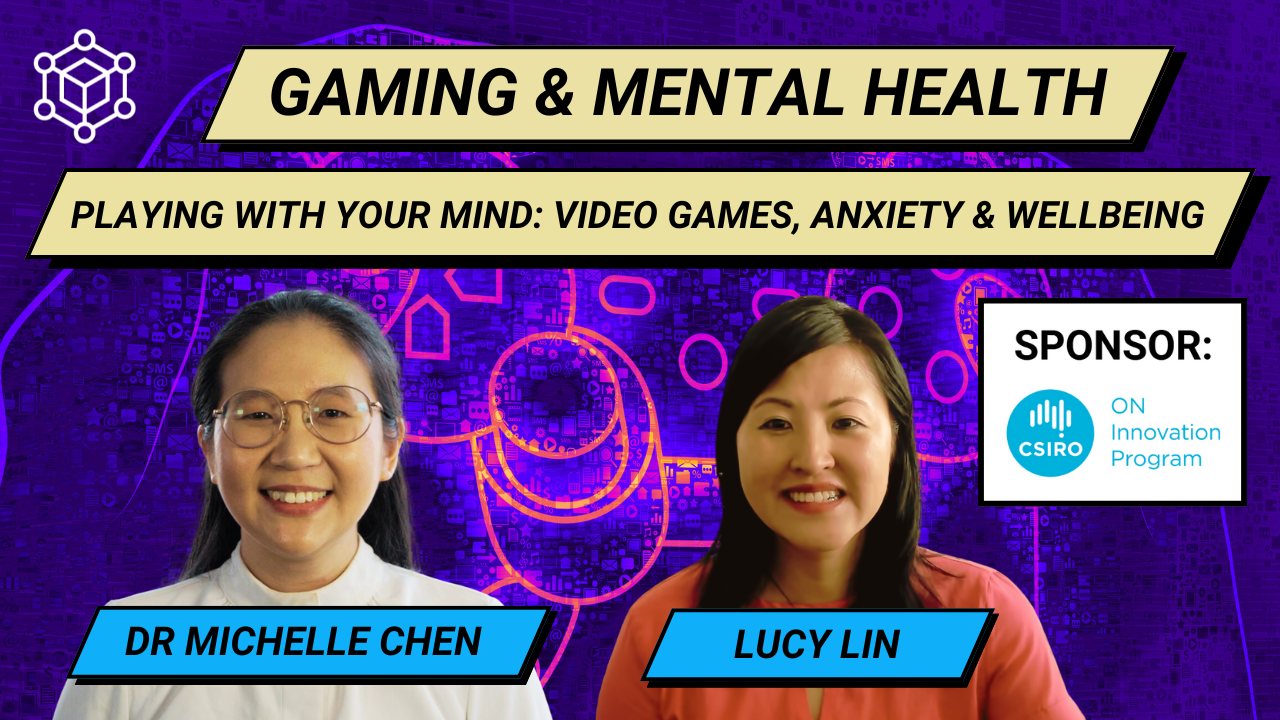
Dr Michelle Chen knows this dark side intimately. With fifteen years of experience in the gaming industry, she’s seen first‑hand how games are engineered for maximum playtime and spending.
“We were trained to make games addictive,” Michelle explains. “The goal was engagement at all costs - to make players stay, pay and play.”
Over time, that vision began to clash with her own values and her lived experience with anxiety and depression. She started asking bigger questions:
What if games could actually help people instead of harming them? What if play could be good for you?
That question became the seed for Mental Jam, the social‑impact game studio she later founded.
Designing Games That Heal
Through her PhD research at RMIT University, Michelle began co‑creating games with people who have lived experience of mental health challenges. These collaborations turned personal stories of depression and anxiety into “empathy games” - short, emotionally rich experiences where players could feel what it’s like to struggle and recover.
One game recreated the sensation of trying to stay afloat with difficult swimming controls, mirroring the weight of anxiety. Another used black‑and‑white landscapes that slowly bloomed into colour as the player overcame inner “monsters” of self‑doubt and perfectionism.
The goal? Not endless engagement, but understanding, reflection and connection.
Representation and Responsibility
Michelle’s work also tackles how women are portrayed in games. Having developed games in male‑dominated teams, she witnessed the hypersexualisation and objectification of female characters built “for the male gaze.”
“It’s not just who plays games - it’s who _makes_ them,” she says. “When more women and diverse voices create games, we tell different stories - stories that heal instead of harm.”
By recruiting collaborators from different cultural and personal backgrounds, she aims to make Mental Jam a home for inclusive storytelling that represents real people and emotions.
From Research to Real‑World Impact
Michelle joined the CSIRO ON Innovation Program, Australia’s leading accelerator for researchers and entrepreneurs, to transform Mental Jam from a creative practice into a sustainable business. The program helped her refine her approach to scaling mission‑driven games, partnering with health organisations, and building a model that keeps wellbeing front and centre while remaining financially viable.
“We realised: if mental health‑positive games are ever going to compete with the addictive ones, they have to stand as real businesses too.”
Why Positive Play Matters
Violent storylines, toxic communities, and manipulative monetisation don’t just affect players - they shape the culture around play itself. Positive, intentional games - like the ones Michelle builds - show us that the medium can also teach empathy, courage, and calm.
Gaming isn’t going away. But as creators like Michelle lead the way, the industry is starting to remember what game design is really about: crafting experiences that make people feel more alive, not less.
Listen to the Podcast Episode: Gaming & Mental Health
🎙️ Website: https://www.emergingtechunpacked.com/episodes/gamingmentalhealth
🎙️ YouTube: https://youtu.be/kA-cKT-Ih0w
🎙️ Apple Podcast: https://podcasts.apple.com/us/podcast/video-games-and-mental-health-gaming-for-wellbeing/id1734061980?i=1000749935448
🎙️ Spotify: https://open.spotify.com/episode/3H9NJG8DyTRKi5PNOzyXCO?si=dcb70e855d424599
🎙️ Insights Article: https://www.lucy-lin.com/insights/gamingmentalhealth
Subscribe to Emerging Tech Unpacked on your favourite podcast platform or watch the episode on YouTube. Visit our website to learn more and join the conversation on social media!
🎙️ Website: https://www.EmergingTechUnpacked.com/
🎙️ YouTube: https://www.youtube.com/@emergingtechunpacked
🎙️ Apple Podcast: https://apple.co/4d6Hfoi
🎙️ Spotify: https://spoti.fi/49TS1LG
🔔 LinkedIn: https://www.linkedin.com/company/emergingtechunpacked
🔔 Instagram: https://www.instagram.com/emergingtechunpacked/
🔔 TikTok: https://www.tiktok.com/@emergingtechunpacked
🔔 Facebook: https://www.facebook.com/people/Emerging-Tech-Unpacked/100090565331236/
Support the Podcast!
🤝 Join our community, please consider a small monthly donation on Patreon. Supporters will gain access to exclusive posts, news, announcements and our community chat. You will also have a direct influence on the podcast by voting on future episode topics, submitting questions for guests and suggesting speakers: http://www.patreon.com/EmergingTechUnpacked
💙 If you find this podcast valuable, consider keeping the podcast lights on and helping us cover some of our video and audio editing and operational costs: https://www.paypal.me/lucylin007007
☕ Or buy me a coffee (or three! :-): https://buymeacoffee.com/lucylin
👉 If this article was helpful, please share it and follow **Lucy Lin** and **Emerging Tech Unpacked** for more innovation and careers insights.
🚀 Contact me directly if you would like to partner or collaborate on any content, brand partnerships, sponsorship or speaking opportunities: https://www.lucy-lin.com/contact